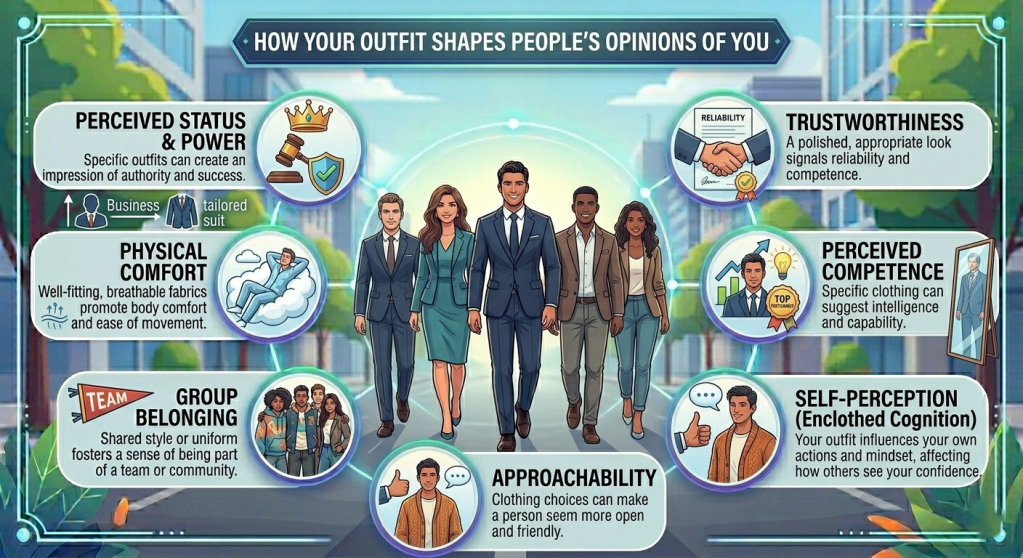
It takes about seven seconds for someone to form a first impression of you. Most of that judgment happens before you’ve said a single word.
Your outfit is doing the talking. Color, fit, cleanliness, style choices, all of it gets read and interpreted almost instantly, often without the other person even realizing they’re doing it.
This isn’t fair, exactly. But it is real. And understanding how it works gives you a surprising amount of control over how you’re perceived, whether you’re walking into a job interview or just grabbing coffee with someone new.
Even something as small as a well-chosen piece from a yard of deal sale can shift that first read in your favor. Let’s get into the psychology behind it.
The Science of First Impressions
Researchers studying social perception have found that humans make snap judgments about competence, trustworthiness, and status based on appearance alone, often within seconds of seeing someone.
Clothing is one of the strongest signals in that quick read. Unlike facial expressions or body language, which can shift moment to moment, an outfit stays constant and gives the observer something concrete to interpret.
This is why dressing intentionally matters so much more than people often assume.
Why the Brain Jumps to Conclusions So Fast
The brain is wired to categorize quickly for efficiency. Faced with limited information about a stranger, it leans on visual shortcuts, polish, color, fit, cleanliness, to fill in the gaps about personality and status.
These shortcuts aren’t always accurate, but they’re powerful. And they happen automatically, which is exactly why your outfit matters even in situations where you’d rather not be judged at all.
What People Actually Notice First
Not every part of an outfit carries equal weight. Some elements get read instantly, while others barely register.
Fit tends to be the biggest factor. Clothes that fit well read as put-together, regardless of brand or price. Baggy or overly tight clothing, even from expensive labels, often reads as careless or unaware.
Cleanliness and condition come next. Wrinkled, stained, or worn-out clothing signals a lack of attention to detail, fairly or not. This applies even to budget clothing picked up through a smart yard of deal; condition matters more than original price.
Color choices influence emotional tone. Darker, muted colors often read as serious or authoritative. Brighter colors can suggest approachability or creativity, depending on context.
Grooming and accessories round out the picture, though they tend to register slightly after the outfit itself sets the initial tone.
How Outfits Influence Different Types of Judgments
People don’t just notice clothing. They use it to draw conclusions about specific traits, often without realizing they’re doing it.
Competence and Professionalism
Structured, well-fitted clothing tends to signal competence in professional settings. This is part of why business attire remains a default choice in formal interviews and corporate environments, even as casual dress codes spread elsewhere.
Studies on workplace perception consistently show that well-dressed individuals are rated as more competent and capable, even when their actual qualifications are identical to a more casually dressed counterpart.
Trustworthiness
Clean, conventional clothing often reads as more trustworthy than unconventional or disheveled outfits. This isn’t about creativity being bad; it’s about predictability feeling safer to unfamiliar observers.
This matters especially in situations involving money, contracts, or new business relationships, where trust needs to be established quickly.
Approachability
Softer colors, relaxed fits, and casual styling often signal openness and friendliness. This is why customer-facing roles frequently favor slightly more casual, approachable dress codes compared to executive or legal professions.
Status and Wealth
Clothing remains one of the most visible status indicators in modern society. Quality fabric, good tailoring, and recognizable design choices often suggest financial stability, regardless of actual circumstances.
Interestingly, the relationship between price and perceived status isn’t always direct. A well-fitted, simple outfit picked up through a yard of deal can often read as more put-together than an expensive but poorly fitted alternative.
Context Changes Everything
The same outfit can create completely different impressions depending on the setting. A tailored blazer feels appropriate in a boardroom but oddly formal at a casual brunch. Athletic wear feels natural at the gym but out of place at a business dinner.
This is where dressing strategically becomes more important than simply dressing expensively. Matching your outfit to the context shows social awareness, which itself becomes part of how people judge you.
Reading the Room Before Getting Dressed
Before choosing an outfit for an important occasion, consider who you’ll be around and what unspoken expectations exist in that environment. Overdressing and underdressing both send signals, just different ones.
A little research into typical dress expectations for a specific event, workplace, or social circle removes much of the guesswork here.
Can Clothing Choices Backfire?
Yes, and it’s worth understanding how. Trying too hard to impress can sometimes read as insecurity rather than confidence. Excessive logos, overly flashy pieces, or clothing that clearly doesn’t fit someone’s usual style can create suspicion rather than admiration.
Authenticity tends to read better than obvious effort. People generally respond more positively to outfits that feel natural and consistent with someone’s overall presentation, rather than outfits that feel like a costume for the occasion.
This is part of why building a wardrobe gradually, including smart additions found through a genuine yard of deal, tends to create a more cohesive, believable personal style than one-off expensive purchases worn awkwardly.
Practical Ways to Use This to Your Advantage
Understanding how outfits shape opinions doesn’t mean obsessing over every detail. It means making a few intentional choices where it counts.
- Prioritize fit over price. A well-fitted, affordable outfit consistently outperforms an ill-fitting expensive one in how it’s perceived.
- Match color to desired impression. Choose darker, structured pieces for authority and softer, relaxed pieces for approachability, depending on the situation.
- Keep clothing clean and well-maintained. Condition matters as much as style in shaping first impressions.
- Research dress expectations beforehand. Understanding context prevents both overdressing and underdressing.
- Build a flexible wardrobe through smart shopping. Watching for a real yard of deal on versatile, well-made pieces makes it easier to dress appropriately across different situations without overspending.
When Other People’s Opinions Shouldn’t Matter
It’s worth saying clearly: understanding this dynamic doesn’t mean chasing approval from everyone you meet. Some situations, like casual time with close friends or family, genuinely don’t require this level of consideration.
The goal is having the tools to dress intentionally when it matters, like interviews, professional networking, or first meetings, while still feeling free to dress purely for comfort and self-expression elsewhere.
Conclusion
Your outfit communicates before you do. Fit, cleanliness, color, and context all combine to shape how others perceive your competence, trustworthiness, and approachability, often within seconds.
This doesn’t require an expensive wardrobe to manage well. It requires intention. Understanding what different choices signal, matching outfits to context, and occasionally taking advantage of a smart yard of deal to build a versatile, well-fitted wardrobe goes a long way toward shaping the impression you actually want to give.
People will judge based on appearance whether you plan for it or not. Might as well make sure that judgment works in your favor.
FAQs
1. How quickly do people actually form opinions based on clothing? Research suggests first impressions form within seconds of seeing someone, with clothing playing a significant role in that initial judgment.
2. Does expensive clothing always create a better impression? Not necessarily. Fit and condition often matter more than price. A well-fitted piece found through a smart yard of deal can create a stronger impression than an expensive but poorly fitted item.
3. Can dressing too formally backfire in casual settings? Yes. Overdressing relative to the context can come across as out of touch or trying too hard, which sometimes creates a less favorable impression than dressing appropriately for the occasion.
4. Is it shallow to care about how clothing affects people’s opinions? Not necessarily. While appearance shouldn’t be the only measure of someone’s worth, understanding how perception works is a practical skill, especially in professional or unfamiliar social situations.
5. How can I dress appropriately without overspending on my wardrobe? Focus on versatile, well-fitted basics and watch for genuine sales. A smart yard of deal on quality pieces lets you build a flexible, appropriate wardrobe without a large financial investment.


